Phasing-out Desflurane
Photo: Fuse / Getty
 Game Changer (>100 tCO₂e per hospital or >3 tCO₂e per primary practice)
Hospitals That Have Already Implemented This Solution
Progress Milestones
- •2024: Northwest Territories (Canada) phases out desflurane
- •2025: Nunavut (Canada) phases out desflurane
- •2025: Newfoundland & Labrador (Canada) phases out desflurane
- •2026: As of January 1st, routine use of desflurane is banned in the European Union
- •2026: Desflurane consumption in Canada is estimated to have dropped by 95% in the last decade
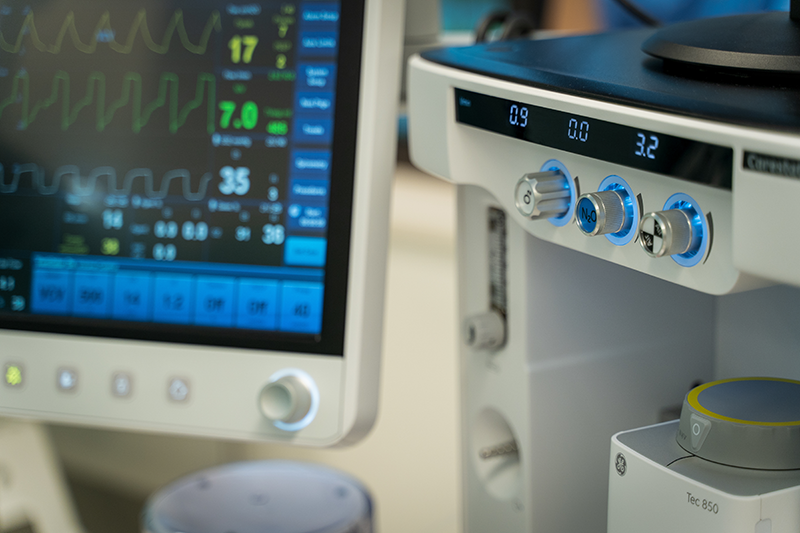
Desflurane has the highest global warming potential among anesthetic gases at 2500x more than carbon dioxide. Using just one bottle of desflurane is equivalent to burning 440kg of coal. Among other inhaled anesthetics, desflurane also has the lowest clinical potential, requiring higher concentrations to achieve the same effect.
Remove desflurane from operating rooms. Safe, effective, and less-costly alternatives exist including sevoflurane or total intravenous anesthesia (TIVA).

This solution is featured by Choosing Wisely Canada
“Don't use desflurane when other anesthetic drugs and techniques are equally effective and less harmful to the environment.”
Anesthetic gases possess significant global warming potential (GWP) and contribute approximately 5% of the harmful greenhouse gas emissions of a typical hospital. However, not all anesthetic gases are equally harmful. The anesthetic gas desflurane has the highest GWP at twenty times more than that of sevoflurane. In addition, when both are delivered at equal fresh gas flows, desflurane has approximately 50 times the impact of sevoflurane due to its lower potency. Patient care can be provided safely and efficiently without desflurane; anesthetic alternatives such as sevoflurane, intravenous anesthesia or regional techniques should be considered, depending on clinical and geographical context. The restriction of the use of desflurane is supported by the Canadian Anesthesia Society, American Society of Anesthesiologists and World Federation of Societies of Anaesthesiologists. The elimination of desflurane is an effective change that aligns with the Choosing Wisely environmental practice recommendations.
.png)
This solution is featured by the Canadian Coalition for Green Health Care
Learn more about this solution in the Coalition's Green Health Care Guidebook.