
Beta — Some information may be incomplete or inaccurate. We're actively improving the Atlas.
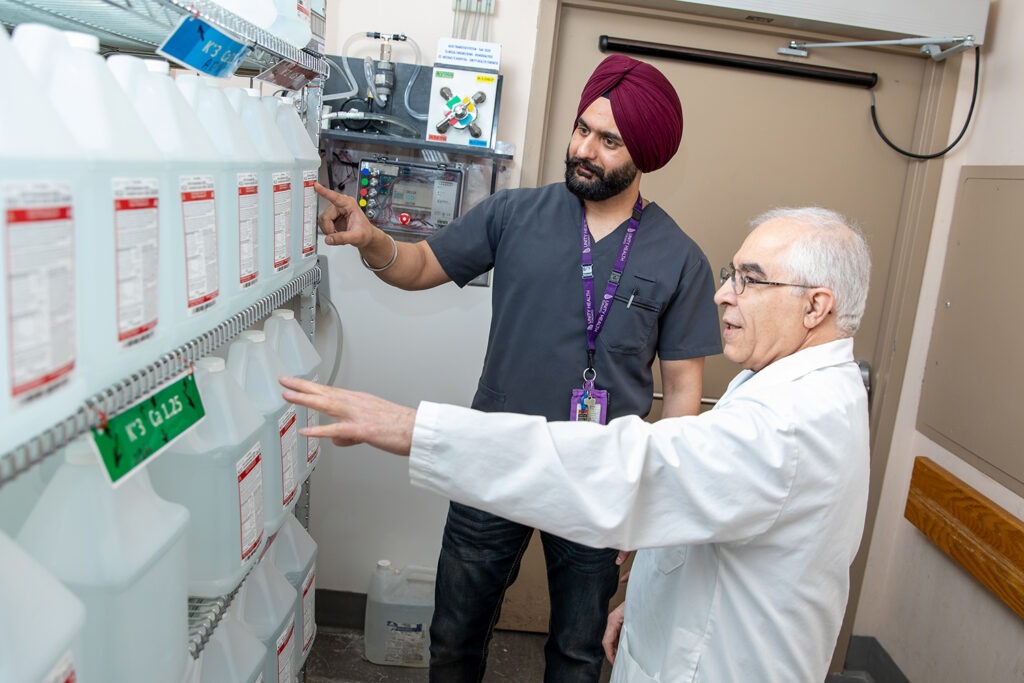
Central delivery of acid concentrate for haemodialysis
Photo: Unity Health Toronto
MitigationScope 3🏥Nephrology
 Needle Nudger (>0.5 tCO₂e or <1 tCO₂e per primary practice)
Climate Impact
30+ tCO₂e
Absolute GHG Reduction
🛢️ Equivalent to at least 69 barrels of oil per year for every 300-bed hospital
Financial Impact
ImplicationsMedium Saving ($25,000-$100,0
SavingsAverage CA$1.56 per dialysis treatment sessions (CA$84,420 for 54,184 sessions per year)
ROIImmediate
Implementation Feasibility
Investment
-Team Size
-Timeline
-The Problem
Traditional dialysis systems generate large amounts of acid waste due to unused concentrate being discarded, creating significant environmental and cost burdens.
The Solution
Implementing a centralized acid concentrate delivery system with large barrels and recirculation lines allows unused acid to return to storage tanks and be redistributed across all dialysis stations.
Suggest a resource
Case Studies

Implementation Experts
Suggest a resource
Toolkit
Loading comments and questions...